May 3, 2018
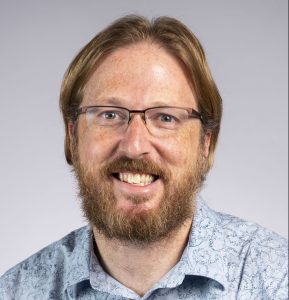
Derek Anderson
Dr. Anderson’s Mizzou INformation and Data FUsion Laboratory (MINDFUL), located in C1201 Lafferre Hall, was formed in January of 2018 and it will be up and running in summer of 2018. Previously, Anderson co-founded and co-directed the Sensor Analysis and Intelligence Laboratory (SAIL) at Mississippi State University. SAIL is a multidisciplinary research lab with diverse applications ranging from smart vehicles (for tier one commercial partners), to security and defense (hand-held, ground vehicle, and aerial platforms), forensic anthropology (clandestine graves and human surface remains), and environment understanding (agriculture and land classification in support of autonomous ground vehicles and robotics). MINDFUL will…
Sep. 15, 2017
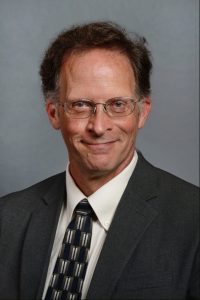
Timothy Haithcoat
Dr. Timothy Haithcoat joined our program as an Assistant Teaching Professor of Data Science and Analytics in August 2022 and brings years of experience in developing and managing geospatial technologies in both research and applied environments to the DSA program. Tim holds a Master’s in Wildlife Biology and a PhD in Geoinformatics, both from the University of Missouri – Columbia. His research interests involve applying geographic information approaches for solving real-world application issues and their subsequent accuracy assessment and validation. This applied research supports interdisciplinary research objectives in a range of diverse areas including wildlife biology, broadband access,…
March 1, 2017
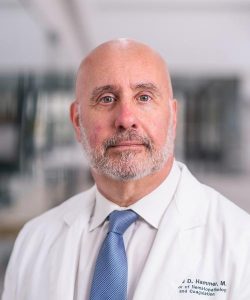
Richard Hammer
Dr. Richard Hammer is highly trained hematopathologist/surgical pathologist with extensive experience and a focus on providing state-of-the-art diagnosis and evaluation using the latest evidence-based medicine. His lab provides high-level service in hematopathology, flow cytometry, coagulation, and molecular diagnostics in hematology. He also is involved in bioinformatics and developing tools to apply digital solutions to clinical practice and clinical decision support.
March 1, 2017
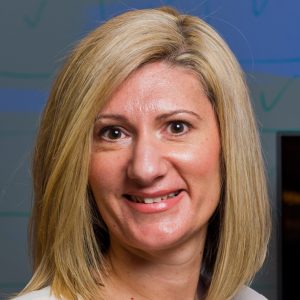
Mirna Becevic
Dr. Becevic’s research is focused on telemedicine and telehealth and the role of virtual care in improving key patient outcomes. In particular, her research focuses on using telehealth technologies to improve access to care for rural and underserved patients. This includes early screening, timely diagnosis, appropriate use of the healthcare system and distance continuing medical education. Dr. Becevic is the lead project evaluator for the Show-Me ECHO (Extension for Community Healthcare Outcomes) project. This virtual, interdisciplinary collaborative network provides a peer and case-based learning platform for primary care providers to gain knowledge in several different specialties and subspecialties (dermatology, asthma,…
Feb. 15, 2017
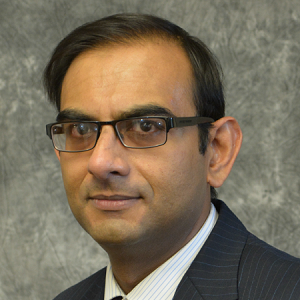
Sounak Chakraborty
Sounak Chakraborty is a Professor in the Department of Statistics and Data Science at the University of Missouri and a Core Faculty member of the MU Institute for Data Science and Informatics. His research lies at the intersection of Bayesian statistics, machine learning, artificial intelligence, and data science, with a particular emphasis on developing statistically rigorous methods for learning from complex, high-dimensional, heterogeneous, and distributed data. His methodological contributions span Bayesian machine learning, federated learning, generative AI, variable selection, kernel methods, survival analysis, spatio-temporal modeling, multi-omics data integration, and uncertainty quantification. Prof. Chakraborty is passionate about translating statistical innovation into real-world…
Dec. 28, 2016
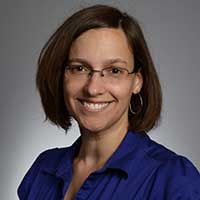
Elizabeth King
My research is focused on understanding the genetic basis and evolution of organismal allocation patterns. The core life processes for every organism, such as surviving in the environment, finding food and mates, and reproducing, require the organism to allocate some of its limited resources to these functions. Different selective pressures have produced the diversity of strategies that we see within and among species in how and when to allocate resources to different structures and functions. I use both computational and empirical techniques to try to understand both how different allocation strategies evolve and the underlying genetic architecture of this highly…
Dec. 28, 2016
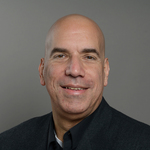
Guilherme DeSouza
Guilherme DeSouza is an associate professor in the Electrical and Computer Engineering Department, an adjunct associate professor in the Computer Science Department and a joint courtesy associate professor with the Sinclair School of Nursing, all at the University of Missouri. Winner of Purdue’s Honeywell Teaching Award, the Purdue’s Maria Canto Neuberger Research Award and the MU Excellence in Teaching Award, DeSouza come to Missouri after working as a principal research scientist at Purdue University and as a Senior Lecturer at the University of Western Australia. He also worked for over 10 years at the Brazilian Power Systems Research center on…
Dec. 28, 2016
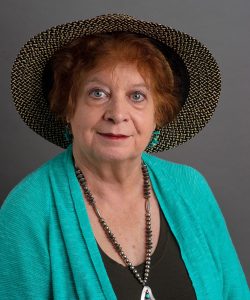
Jeannette Jackson-Thompson
I have the expertise, training, experience and motivation needed for the proposed project. My training is in anthropological linguistics, public health and medical anthropology, with specific training and expertise in survey research/surveillance, questionnaire design and epidemiology. I have a broad background in chronic disease prevention and control and a significant record of accomplishment in program implementation and administration in the private sector, in the public sector and in an academic setting. My research interests include cancer etiology, disparity reduction, quality of life and data quality, including the use of electronic health records to improve data quality and completeness. I have…
Dec. 28, 2016
Christine Elsik
Christine Elsik’s research expertise is in computational biology and bioinformatics, and she works specifically in genome sequencing and annotation. She has worked extensively with genomes of cattle and a number of insect species. Chris will have a joint appointment between Animal and Plant Sciences and will be located in the Animal Science Research Center. She will have responsibilities in developing a collaborative research program in genomics, advising graduate students and teaching bioinformatics or computational biology.