Dec. 28, 2016
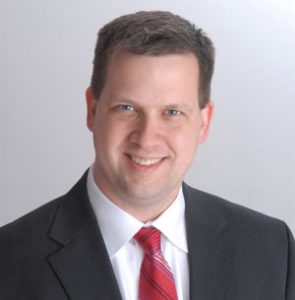
Timothy Matisziw
Dr. Tim Matisziw is an Associate Professor at University of Missouri-Columbia (MU) with a joint appointment in the Department of Geography, Department of Civil & Environmental Engineering, and MU Institute for Data Science and Informatics. He is also the Director of the United States Geospatial Intelligence Foundation (USGIF) accredited Geospatial Intelligence Certificate program (graduate and undergraduate) at MU. He regularly teaches courses in geographic information systems (GIS), transportation geography, location analysis and site selection, and the geospatial sciences in national security. His primary areas of interest and expertise include transportation systems, spatial optimization, geographic information, and spatial decision support systems. Dr.
Dec. 28, 2016
Joi Moore
Dr. Moore received her B.S. degree in Computer Science and M.S. degree in Management from North Carolina State University, both focusing on a minor in Management Information Systems. After teaching for two years in the Department of Computer Information Systems at Shaw University, Dr. Moore turned her attention to earning her Ph.D. in Instructional Technology from the University of Georgia with a cognate area of Management Information Systems. Her current research agenda is the application of appropriate design principles for computer-based environments that support learning and/or effectively improve a desired performance. She has served as President of the Training and…
Dec. 28, 2016
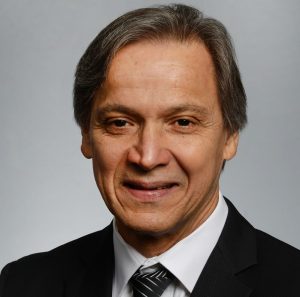
Eduardo Simoes
My research and teaching interests include: use of health management and informatics to improve planning, policy development, management and evaluation of health care, public health programs and global health initiatives. Use information technology to address surveillance of preventable diseases and their complications in order to tailor health programs and activities. Health care service and outcome research. Teaching of epidemiology, preventive medicine and public health applications of information technology.
Dec. 28, 2016
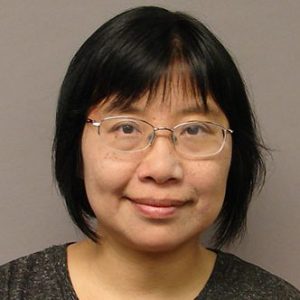
Xiaoqin Zou
The molecular interactions that drive ligand-protein binding are a key to quantitatively understanding the basis of molecular recognition and to designing therapeutic interventions through rational drug design. Drug molecules usually act by binding to specific target proteins. Drug candidates that have high binding affinities can be identified by their geometric and chemical complementarity to the target in a process analogous to solving a “jigsaw puzzle”, if the target structure is known. An energy model that can give rapid and accurate evaluation of the molecular interaction strength is thus essential for selecting plausible candidate compounds from a chemical database consisting of…
Dec. 28, 2016
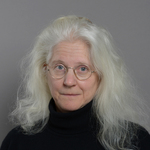
Toni Kazic
Toni Kazic is an associate professor in the Electrical Engineering and Computer Science Department at the University of Missouri. She is currently working on methods to infer the structure of complex networks using the disease lesion mimic mutants of maize as a model system. Her work has included the development of an architecture for community query, deposit, review and curation of information on biochemical reactions, and the analysis of extant reaction networks. Kazic is a fellow of the American College of Medical Informatics and was an Invited Researcher to the Institute for New Generation Computer Technology. She served as a…
Dec. 28, 2016
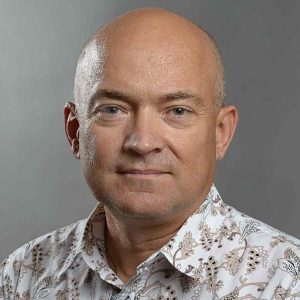
Mihail Popescu
Mihail Popescu has received a MS in Medical Physics in 1995, a MS in Electrical Engineering in 1997 and a PhD in Computer Science in 2003 from the University of Missouri, Columbia, Missouri. Dr. Popescu has published seven articles in refereed journals, 20 conference papers, one book, and one book chapter. His research focus has been on eldercare technologies, medical decision making, and epigenetic pattern discovery.
Dec. 28, 2016
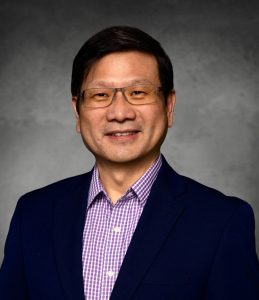
Chi-Ren Shyu
Chi-Ren Shyu (he/him/his) is Director of MUIDSI, Associate Dean for Graduate Education and Strategic Initiatives, and Chair of the Executive Committee for the Mizzou Quantum Innovation Center. Dr. Shyu has organized and chaired technical program committees for several IEEE conferences, including IEEE HealthCom, IEEE BigMM, IEEE BIBM, and IEEE BIBE. He represents MU on the Southeast Conference (SEC) Artificial Intelligence Consortium and the Missouri Department of Higher Education and Workforce Development’s Advisory Committee for Building Missouri’s AI Talent Pipeline (2026). He is the PI of Mizzou’s NSF CyberCorps SFS project ($3.6M). Since joining MU in 2000, Dr. Shyu has…
- « Previous
- 1
- …
- 3
- 4
- 5
- 6