Oct. 23, 2018
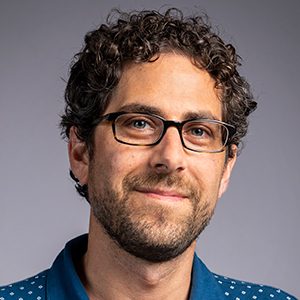
R. Keith Slotkin
The Slotkin laboratory uses Arabidopsis thaliana, a reference flowering plant, as a model to investigate how eukaryotic cells repress transposable elements. Transposable elements are fragments of DNA that can duplicate or move from one location to another. Their ability to replicate has resulted in transposable elements occupying vast amounts of most eukaryotic genomes, including nearly half of the human genome. Although often overlooked or dismissed as “junk DNA”, transposable elements have played an important role in the structure and evolution of the eukaryotic genome. However, when transposable elements are active, they cause DNA damage and new mutations by inserting into…
Oct. 17, 2018
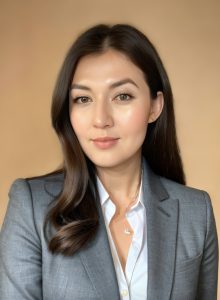
Iuliia (Yulia) Innokenteva
Yulia is a fifth-year PhD student in bioinformatics at the University of Missouri, Columbia. With a strong background in health informatics and a Master of Public Health degree from MU, Yulia brings a unique interdisciplinary perspective to her research. Her primary focus as a PhD student lies in developing efficient pipelines for single-cell RNA-seq data interpretation, a critical area in the field of bioinformatics. Additionally, Yulia utilizes her expertise in machine learning to tackle the complex task of tumor microenvironment deconvolution, contributing to advancements in cancer research.
Aug. 30, 2018
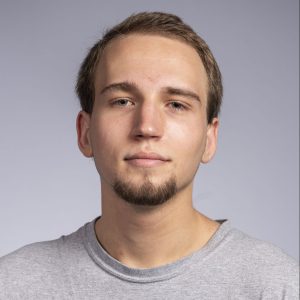
William Baskett
I am a PhD student studying bioinformatics. I received my bachelor’s degree in biology from the University of Missouri in 2018 and my masters in data science in 2021. My research focuses on developing algorithms to extract information from biomedical data.
July 27, 2018
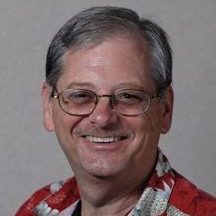
James Keller
James M. Keller is a Curators Professor in the Electrical Engineering and Computer Science Department at the University of Missouri as well as R. L. Tatum Professor for the college. Keller’s research interests are in computational intelligence with current applications to eldercare technology, bioinformatics, geospatial intelligence and landmine detection.
July 9, 2018
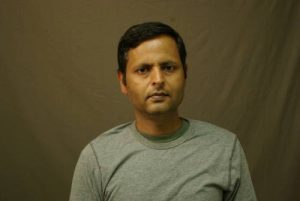
Susanta Behura
I apply bioinformatics and data science tools in diverse research areas such as 1) transmission of arboviral diseases, 2) animal diseases and 3) pregnancy establishment and success. I am also interested in basic researches relating to genome biology and evolution, comparative genomics, non-coding RNA and regulatory elements, and biological roles of small open reading frames.
July 18, 2017
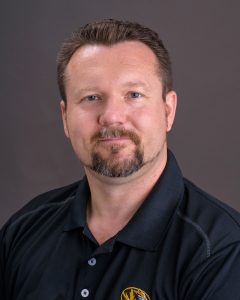
Mikhail Kovalenko
Mikhail came to Bioinformatics with an Electrical Engineering and computer programming background. Recognizing the trends towards massive data processing needs in health care, he joined MUIDSI in hopes to make his own contribution to the advancement of computational diagnostic tools and the Precision Medicine initiative.
Feb. 15, 2017
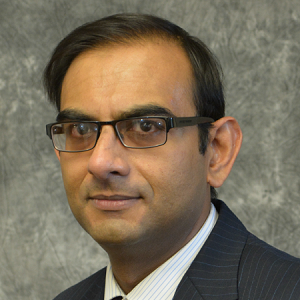
Sounak Chakraborty
Sounak Chakraborty is a Professor in the Department of Statistics and Data Science at the University of Missouri and a Core Faculty member of the MU Institute for Data Science and Informatics. His research lies at the intersection of Bayesian statistics, machine learning, artificial intelligence, and data science, with a particular emphasis on developing statistically rigorous methods for learning from complex, high-dimensional, heterogeneous, and distributed data. His methodological contributions span Bayesian machine learning, federated learning, generative AI, variable selection, kernel methods, survival analysis, spatio-temporal modeling, multi-omics data integration, and uncertainty quantification. Prof. Chakraborty is passionate about translating statistical innovation into real-world…
Dec. 28, 2016
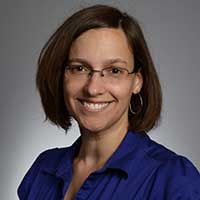
Elizabeth King
My research is focused on understanding the genetic basis and evolution of organismal allocation patterns. The core life processes for every organism, such as surviving in the environment, finding food and mates, and reproducing, require the organism to allocate some of its limited resources to these functions. Different selective pressures have produced the diversity of strategies that we see within and among species in how and when to allocate resources to different structures and functions. I use both computational and empirical techniques to try to understand both how different allocation strategies evolve and the underlying genetic architecture of this highly…
Dec. 28, 2016
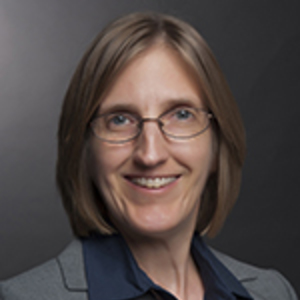
Christine Elsik
Christine Elsik’s research expertise is in computational biology and bioinformatics, and she works specifically in genome sequencing and annotation. She has worked extensively with genomes of cattle and a number of insect species. Chris will have a joint appointment between Animal and Plant Sciences and will be located in the Animal Science Research Center. She will have responsibilities in developing a collaborative research program in genomics, advising graduate students and teaching bioinformatics or computational biology.